Chair Exercises for Seniors: A Simple Seated Routine
By:Author:Painletics Editorial
Updated on:October 23, 2026

- Do Chair Exercises Actually Help Seniors?
- What Makes Seated Movement Different From Standing Work
- How Often Should Seniors Do Chair Exercises
- Chair Workouts Versus Standing Routines for Adherence
- Making Chair Exercises Part of a Daily Routine
- The Overnight Results Myth in Senior Fitness
- What Changes the Results From Chair Exercises
- Common Mistakes With Seated Exercise Routines
- Tracking Chair Exercise Progress With Painletics
- Starting a Seated Routine That Actually Sticks
Chair exercises for seniors work because they let joints move through a safe range without the balance demands or impact of standing workouts. A sturdy chair gives support for the spine and hips, which means the muscles can do the work instead of bracing against a fall.
Seated movement still raises heart rate, loosens stiff joints and keeps muscles active, just with the floor and balance risk taken out of the equation.
This article covers whether seated exercise actually does anything useful, how often to do it, a simple routine to start with, and the mistakes that quietly stall progress.
Do Chair Exercises Actually Help Seniors?
Muscles and joints respond to movement, not to the specific position the body is in when it moves.
A seated arm raise still works the shoulder through its arc, a seated march still asks the hip flexors and core to coordinate, and a seated calf raise still loads the lower leg.
The honest arithmetic: a 10-minute seated session, five days a week, adds up to roughly 50 minutes of movement a week that wasn't happening before.
That's not nothing. It's a repeatable habit that can be built on, rather than a one-off burst of effort that fizzles out after a week.
What Makes Seated Movement Different From Standing Work
The Chair Removes the Balance Tax
Standing exercise asks the body to manage movement and balance at the same time, which can eat up effort before a muscle even gets properly worked. A chair takes balance out of the equation, so the energy goes straight into the muscle doing the lifting, pressing or stretching.
Range of Motion Still Counts
Seated exercises can still move a joint through most of its natural range, whether that's a knee extending, a shoulder circling or a spine rotating gently side to side. The muscle doesn't know it's sitting down, it only knows whether it's being asked to contract and release.
How Often Should Seniors Do Chair Exercises
Short and Frequent Beats Long and Rare
A 10 to 15 minute seated session most days of the week tends to build more lasting change than one long session saved for the weekend, simply because the body gets more chances to practise the movement.

The table below is a simple starting frame, not a strict prescription - adjust the days and duration to whatever is sustainable.
| Day | Focus | Duration |
|---|---|---|
| Monday | Arms and shoulders | 10 minutes |
| Tuesday | Legs and ankles | 10 minutes |
| Wednesday | Rest or gentle stretch | 5 minutes |
| Thursday | Core and seated marches | 10 minutes |
| Friday | Full seated routine | 15 minutes |
Chair Workouts Versus Standing Routines for Adherence
A standing strength routine can build more muscle per session, in theory, but only if it actually gets done.
For many seniors, the standing version gets skipped because of balance worries, joint discomfort or simply not having someone nearby to help.
A chair routine that gets completed four times a week beats a standing routine that gets attempted once and abandoned, because the body only adapts to what it actually repeats.
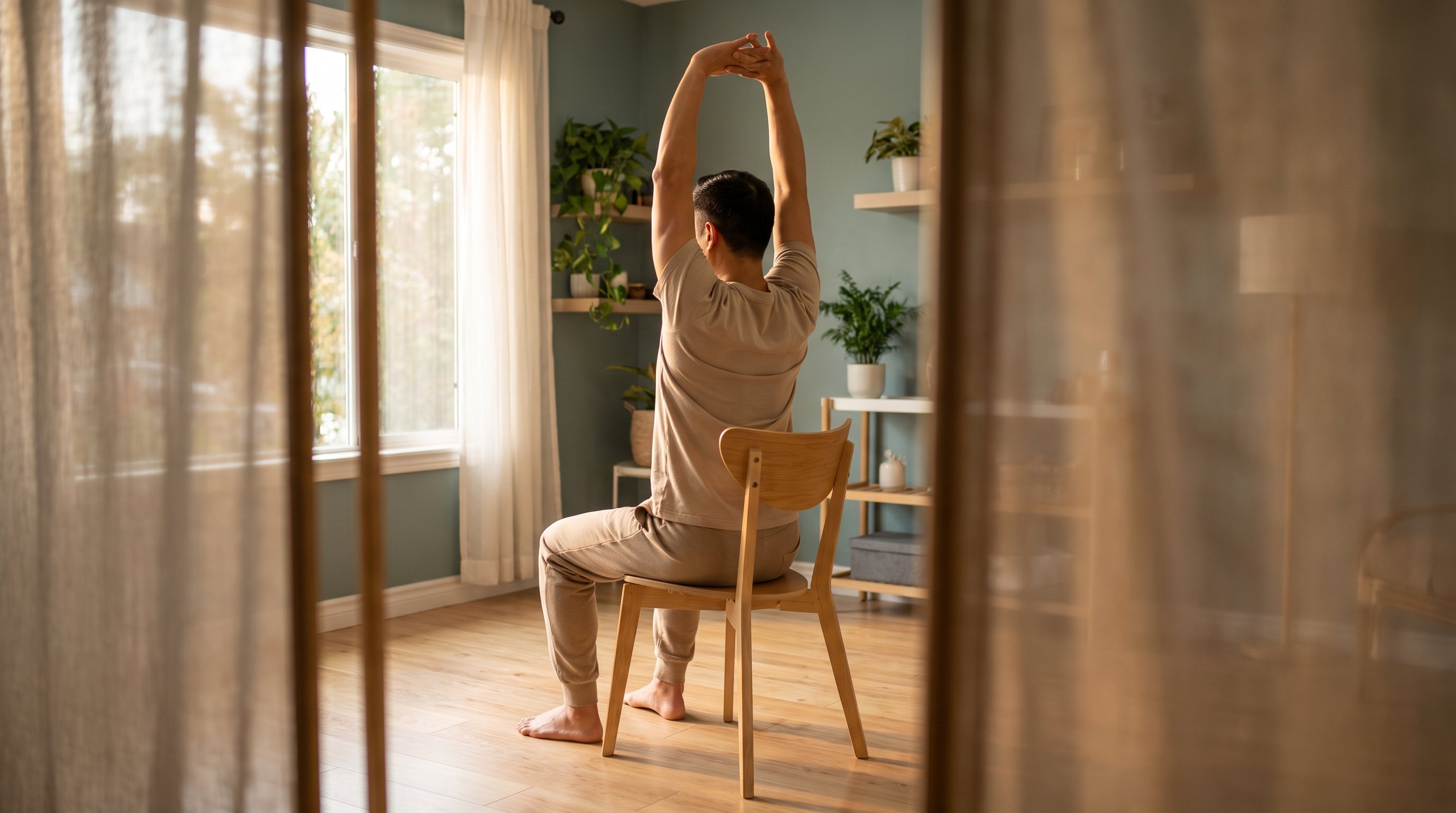
Sessions completed, not sessions planned, is what moves the needle over weeks and months.
Making Chair Exercises Part of a Daily Routine
Pairing the routine with something already happening daily, like a coffee break or a favourite TV show, makes it far easier to remember than treating it as a separate appointment.
A kitchen chair, a dining chair or any seat with no wheels and a flat base works fine, no special equipment needed.
Painletics fits into this kind of routine by offering exercises tailored to the areas giving the most trouble, plus a tracker to keep tabs on steps, hydration and the routines already in progress, so the habit has a visible record instead of relying on memory alone.
The Overnight Results Myth in Senior Fitness
No chair routine delivers fast, visible change in a few days, and no exercise can target fat loss in one specific area of the body.
The body decides where it draws energy from, and that decision isn't something an exercise choice can override.
What chair exercise realistically offers is steadier joints, more comfortable daily movement and a stronger habit of staying active, built up gradually rather than overnight.
That's a slower promise than the one most people want to hear, but it's the one that holds up.
What Changes the Results From Chair Exercises
Three things matter more than any single exercise choice.
Factors That Move the Needle
- Consistency over weeks - a short routine done most days beats a longer one done rarely, because the body adapts to repeated signals.
- Full range of motion - moving a joint as far as comfortably possible gets more out of each rep than rushing through a shortened version.
- Gradual increase in reps - adding a rep or two every week or so keeps the routine challenging without needing new equipment.
Common Mistakes With Seated Exercise Routines
Using an Unstable Chair
A chair with wheels, a soft cushion or a wobbly leg can undo the safety benefit of sitting down in the first place - stick to a solid, flat-based chair against a wall if possible.
Skipping the Warm-Up
Jumping straight into bigger movements without a minute or two of gentle shoulder rolls or ankle circles can make the first few reps feel stiffer than they need to - a short warm-up smooths that out.
Holding the Breath
It's common to tense up and hold breath during effort, which just adds strain - breathing out on the harder part of the movement keeps things easier.
Doing Too Much Too Soon
Starting with 30 minutes on day one often leads to soreness that puts people off day two - shorter sessions that get repeated beat longer ones that get abandoned.
Tracking Chair Exercise Progress With Painletics
Building a seated routine is easier with a clear view of what's been done and what's left for the week.
Painletics brings together exercises tailored to main pain triggers, daily trackers for habits like hydration and steps, lifestyle challenges to keep routines fresh, and audio and video content for guided sessions that fit around any schedule.

Move Without Pain
Ease Neck And Back Tension
Starting a Seated Routine That Actually Sticks
Pick one time of day, one chair and one five-minute routine, and repeat it for a week before adding anything new.
Painletics can help keep that routine visible and tailored to whatever area needs the most attention, so the habit has somewhere to live beyond good intentions.
FAQ
There's no fixed timeline, and it varies by person and starting point. What tends to matter more than speed is whether the routine gets repeated often enough to become a habit.
Chair exercises can cover a lot of ground for strength, flexibility and circulation on their own. Standing work can be added later if balance and confidence allow, but it's not a requirement to see value from seated movement.
A chair against a wall or in a corner adds extra stability for anyone who finds standing up tricky. Starting with upper body seated movements before adding any sit-to-stand elements is a reasonable way to ease in.
Picking it back up at a shorter, easier version is more useful than trying to jump back to where things left off. Painletics keeps the tailored exercises and trackers in one place, which makes restarting less of a guessing game.
Share this post