Hip Mobility Exercises: A Simple Daily Routine for Looser Hips
By:Author:Painletics Editorial
Updated on:October 28, 2026
- A Simple Hip Routine You Can Copy Today
- How Often Hip Mobility Work Actually Pays Off
- Gentle Daily Movement Versus One Hard Hip Workout
- Making Hip Exercises Fit an Ordinary Day
- Adjusting Hip Mobility Work to Different Situations
- What to Expect As Hip Stiffness Starts to Ease
- Keeping Hip Mobility Exercises Consistent With Painletics
- Loosening Tight Hips One Short Session at a Time
Hip mobility exercises work by moving the joint through its full range on a regular basis, which keeps the surrounding muscles and connective tissue from stiffening up.
The hip is a ball-and-socket joint built to rotate, flex and extend in several directions, but sitting most of the day only asks it to bend forward. Short, repeated sessions of deliberate movement in the other directions is what restores the range that sitting never uses.
This article covers a sample routine you can copy, how often to practice it, why gentle daily movement beats one hard weekly session, and how to adjust the approach depending on your situation.
A Simple Hip Routine You Can Copy Today
A good hip mobility day does not need equipment or a lot of time. Here is a routine built around five movements that take the joint through flexion, extension and rotation.
Five-Move Hip Routine
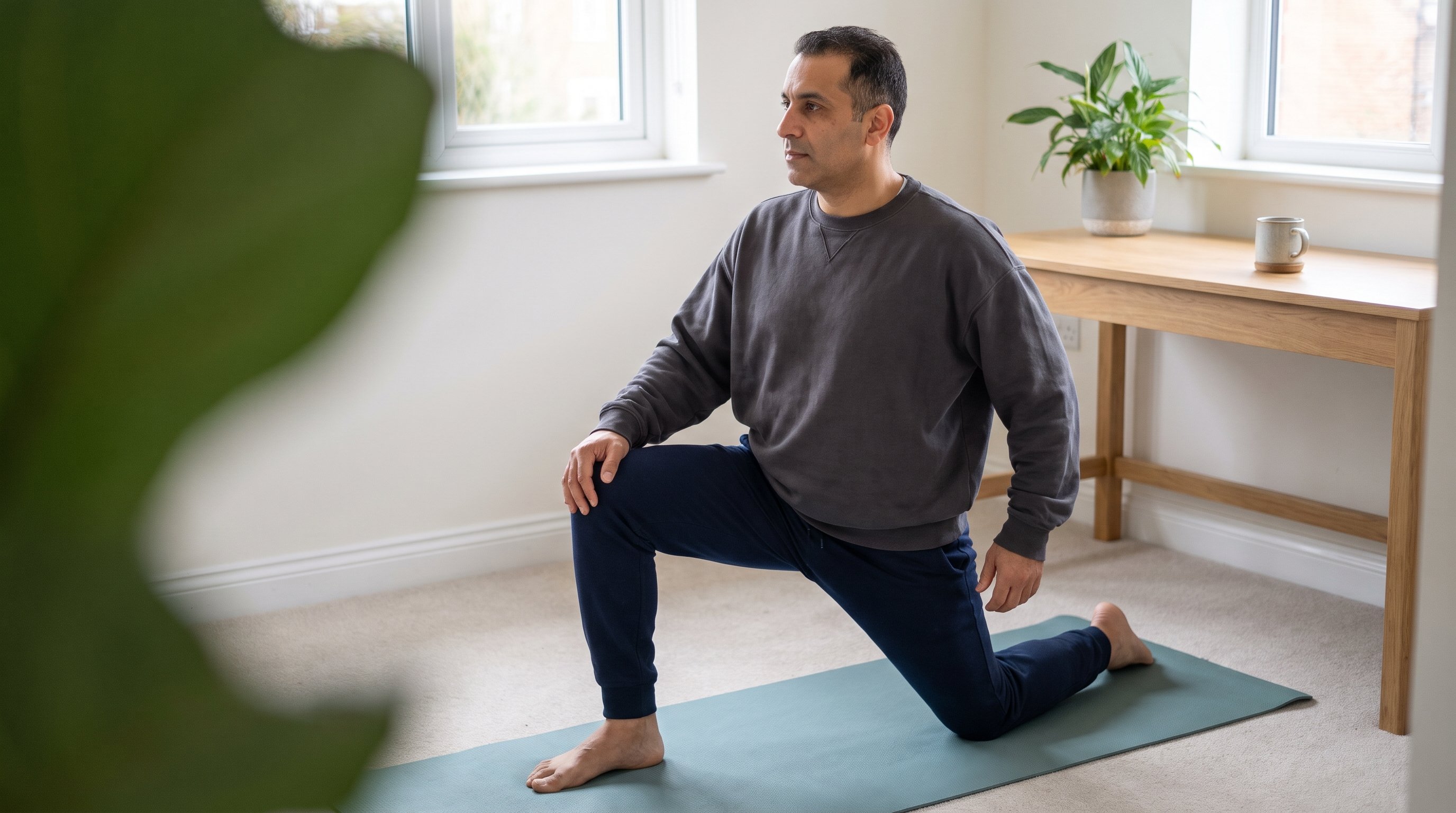
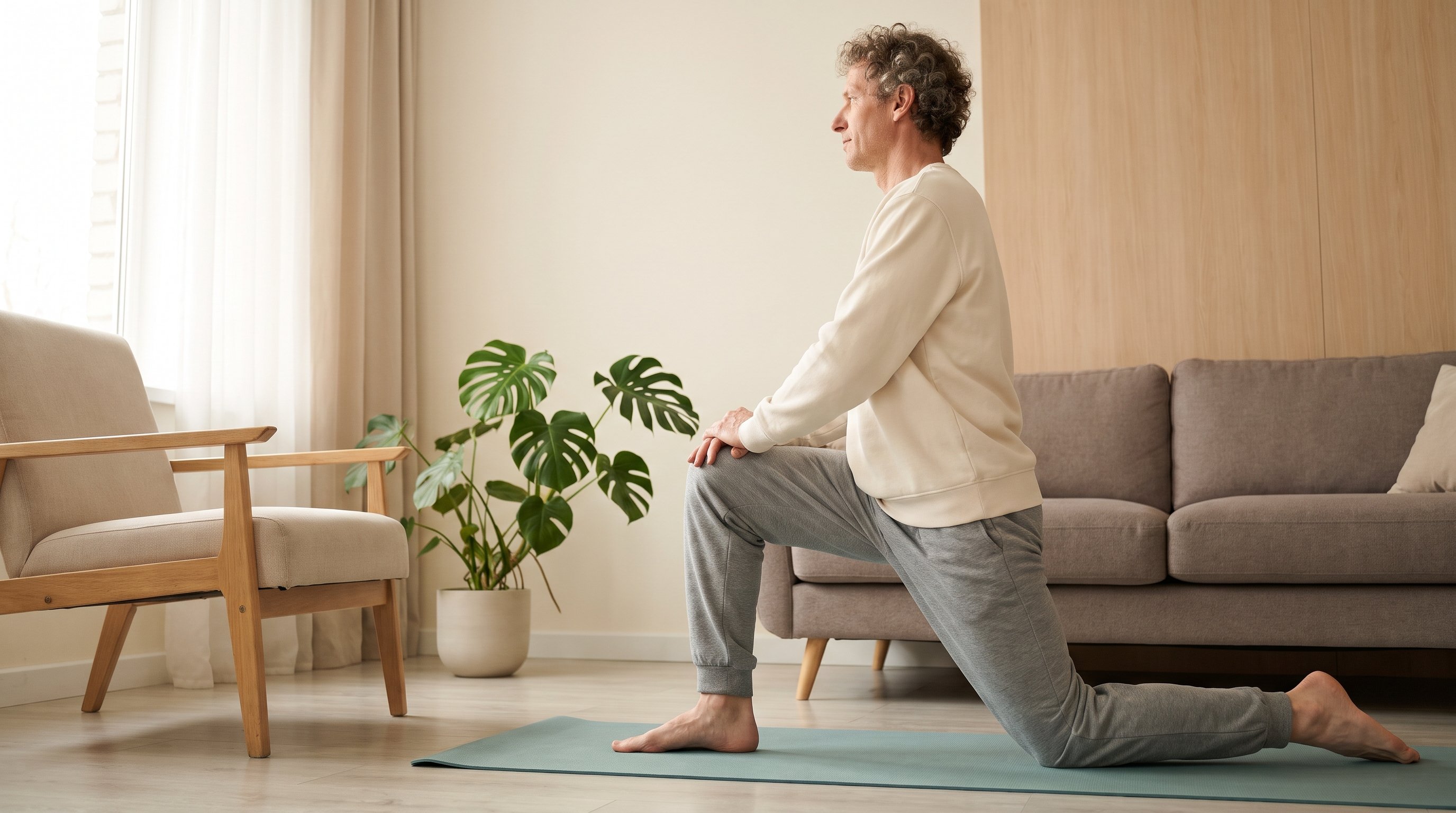
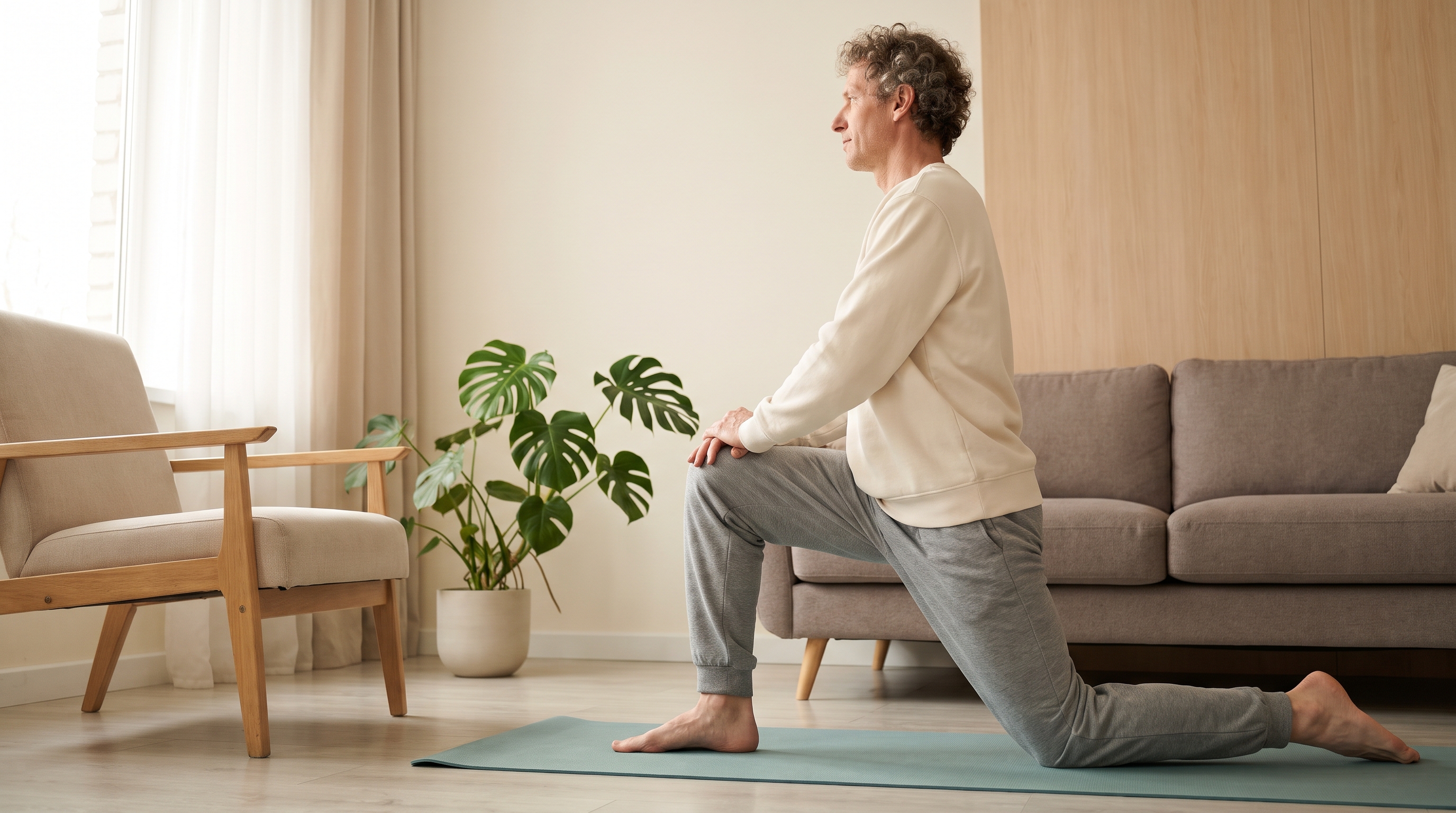
- Kneeling hip flexor stretch - hold each side, breathing steadily, to open the front of the hip.
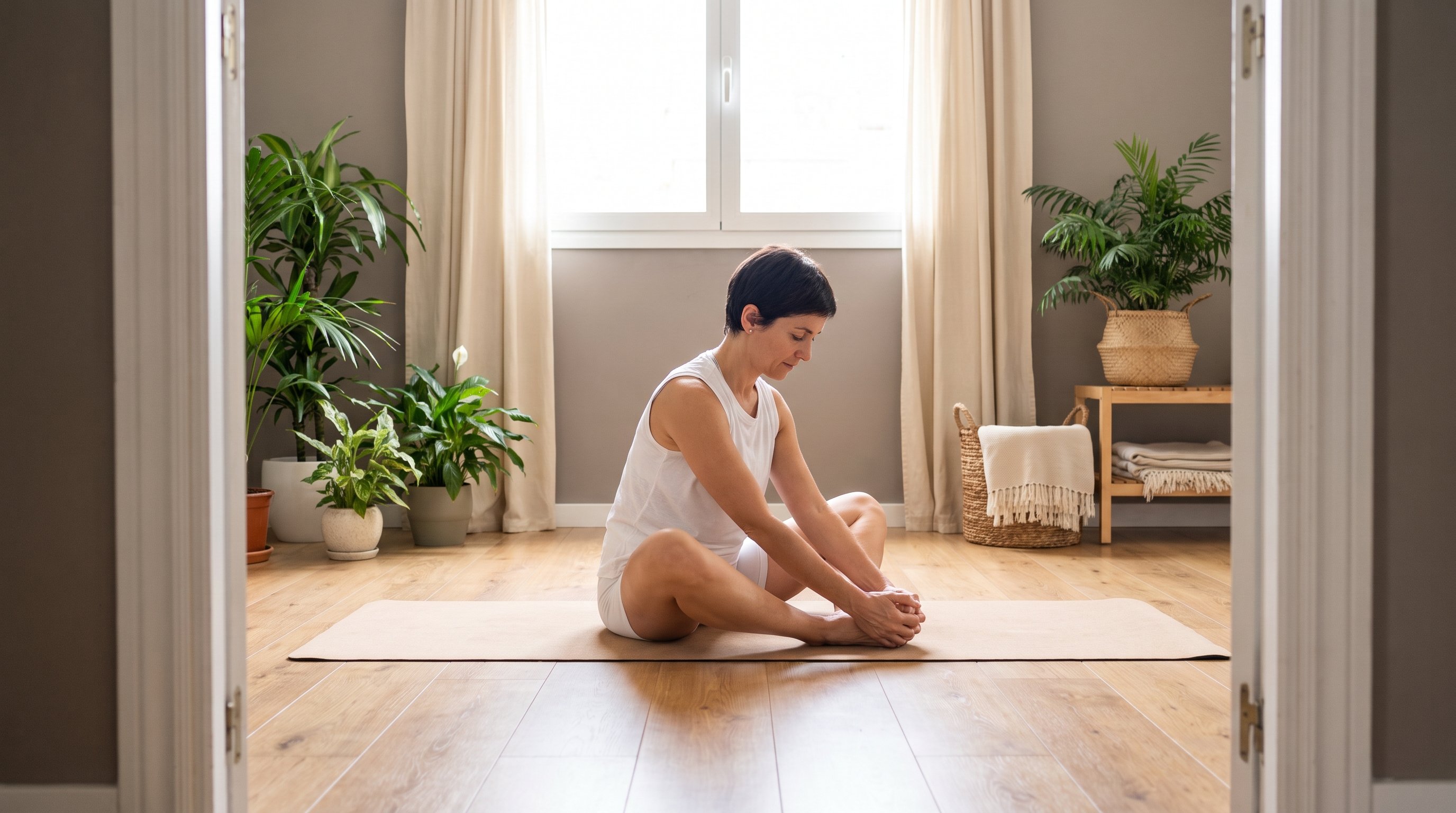
- 90/90 hip switches - sit on the floor and rotate the legs from one side to the other to work internal and external rotation.
- Standing hip circles - hold onto something stable and draw slow circles with one knee lifted, then switch legs.
- Glute bridges - lie on your back and lift the hips to work extension, the direction sitting never trains.
- Deep squat hold - lower into a comfortable squat and hold, letting the hips open under light body weight.
Run through the five in order, spend a short, comfortable amount of time on each, and treat the whole thing as a loop you can repeat once if you have extra time.
How Often Hip Mobility Work Actually Pays Off
Frequency Beats Duration
Short sessions done most days of the week train the joint more often than one long session ever could. The hip adapts to how frequently it is asked to move, not just how long a single session lasts.
| Goal | Frequency | Session Length |
|---|---|---|
| General stiffness | 5 to 6 days a week | Short daily loop |
| Desk job hips | Daily, brief breaks | One or two moves per break |
| Active training support | Before each workout | Full five-move routine |
| Maintenance only | 3 to 4 days a week | Shortened loop |
Pick the row that matches your week and treat it as a floor, not a ceiling.
Gentle Daily Movement Versus One Hard Hip Workout
Compare two approaches: five minutes of hip mobility work most days, or one intense hour-long mobility class once a week.
The hour-long class asks a lot of a joint that has been stiff all week, which makes the session harder to finish and easier to skip next time it rolls around. The five-minute daily version asks very little each time, so it is far easier to actually do.
Over a month, five minutes done most days adds up to more total movement than four missed or half-finished weekly classes. The joint responds to the movement it actually gets, not the session that was planned but skipped.
Making Hip Exercises Fit an Ordinary Day
The routine above only takes a few minutes, which makes it easier to attach to something already happening in your day, like right after you brush your teeth or before you sit down at a desk.
Keeping a record of which days you actually did the routine matters more than the routine itself, since what gets tracked tends to get repeated. Daily habit trackers build this tracking into your routine, so step goals, hydration and movement routines all sit in one place instead of scattered across memory.
Attaching a new habit to an old one and keeping a simple record of it removes most of the friction that causes people to quit in week two.
Adjusting Hip Mobility Work to Different Situations
New to Hip Mobility Work
Start with just the kneeling hip flexor stretch and the glute bridge, since these two cover the biggest gaps left by sitting. Add the other three moves once those feel familiar.
Stuck at a Desk Most of the Day
Break the routine into pieces and spread them across the day instead of doing all five in one sitting. A single 90/90 switch between meetings counts just as much as a full session at home.
Older Adults
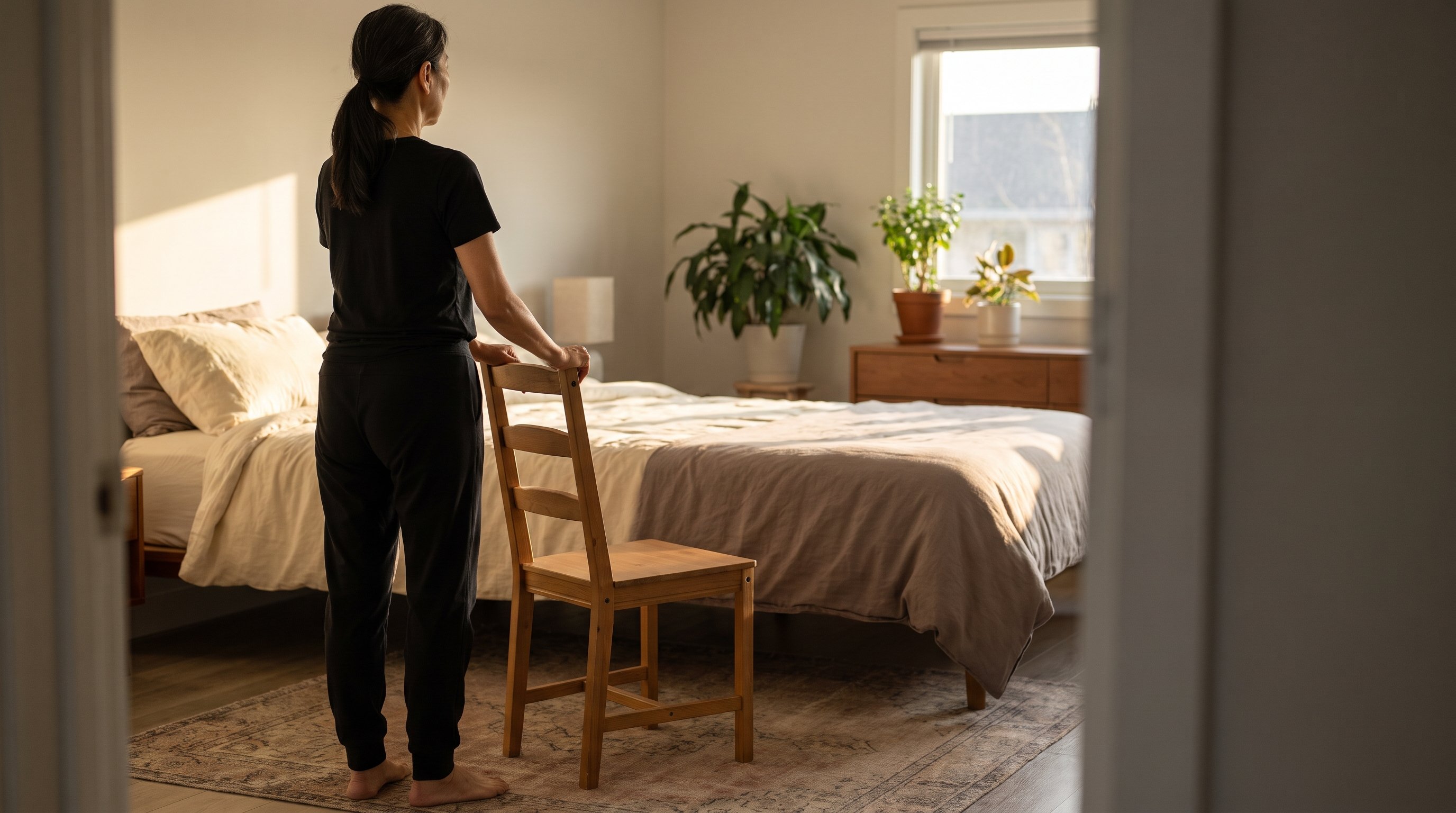
Hold onto a chair or wall during the standing hip circles and skip the deep squat hold if it feels unstable, using a shallower squat instead. Range of motion work still matters here, it just needs a steadier base.
Already Active
Use the full routine as a warm-up before training sessions, since mobile hips move more efficiently under load. Add a second loop on rest days to keep the range from slipping backward.
What to Expect As Hip Stiffness Starts to Ease
Hip mobility does not change overnight, and anyone promising a fixed number of days is guessing. The honest answer is that it depends on how stiff the joint was to begin with and how consistently the routine gets done.
Many people notice the squat hold feels a little less tight or the 90/90 switch gets a bit smoother before they notice anything else changing. That small shift is usually the signal to keep going, not a sign the work is finished.
The biggest drop-off point tends to be the stretch between early motivation and the routine becoming automatic, which is exactly where a daily tracker earns its keep.
Keeping Hip Mobility Exercises Consistent With Painletics
Knowing the five moves is one thing, remembering to actually do them on a Tuesday evening after a long day is another.
Painletics gives you exercises tailored to your main pain triggers and target areas, so the hip-focused moves you need sit alongside habit trackers, lifestyle challenges and audio or video routines built to fit whatever schedule you are working with. The specialist-curated article library also keeps you informed between sessions, which helps the routine feel like part of a bigger plan rather than one more thing to remember alone.
Instead of trying to hold five exercises and a tracking sheet in your head, the whole thing lives in one place you can open for a few minutes a day.
Move Without Pain
Ease Neck And Back Tension
Loosening Tight Hips One Short Session at a Time
Tight hips are usually the result of years of sitting, so a few minutes of deliberate movement most days is what gradually reverses that pattern, not a single intense fix.
Pick one move from the routine above and do it today, then build toward the full loop over the next week, and let Painletics hold the tracking so the habit has something to stick to.
FAQ
It depends on how stiff the hips are and how often the routine actually gets done, so there is no fixed number of days to promise. Consistency most days of the week matters far more than how intense any single session feels.
Movement alone can improve how freely the joint moves, but it works best alongside other habits like hydration and general activity rather than as a standalone fix. Mobility work changes range of motion, it does not target or remove pain from one specific spot.
A shortened version with just one or two moves still counts and beats skipping the day entirely. Spreading the five moves across short breaks works just as well as doing them all in one sitting.
This is the most common point people quit, and a simple daily tracker is usually what gets them past it. Painletics keeps the routine, trackers and reminders together so the habit has structure to lean on once motivation alone is not enough.
Share this post