Posture Exercises For Seniors: A Simple Daily Fix
By:Author:Painletics Editorial
Updated on:October 23, 2026
- What a Good Week of Posture Work Looks Like
- How Often Posture Exercises Actually Help
- Short Daily Reps Versus One Long Weekly Workout
- Making Posture Work Fit an Ordinary Day
- Who Posture Exercises Suit and How to Adapt Them
- What to Expect As Posture Starts to Shift
- Staying Consistent With Posture Exercises Through Painletics
- Building a Posture Habit That Actually Lasts
Posture exercises for seniors work by waking up the muscles that hold the spine upright, mostly through the upper back and the sides of the neck, so slumping stops feeling like the default.
Years of sitting, driving and looking down at screens let certain muscles go quiet while others tighten up, and the body just settles into whatever shape gets used most often. A short daily routine reminds those quiet muscles what their job actually is.
This article covers what a good week of posture work looks like, how often to do it, why gentle and frequent beats one hard session, and how to fit it into an ordinary day.
What a Good Week of Posture Work Looks Like
A workable week mixes short standing drills with seated and wall-based moves, spread across most days rather than saved up for one long session.
A Sample Week
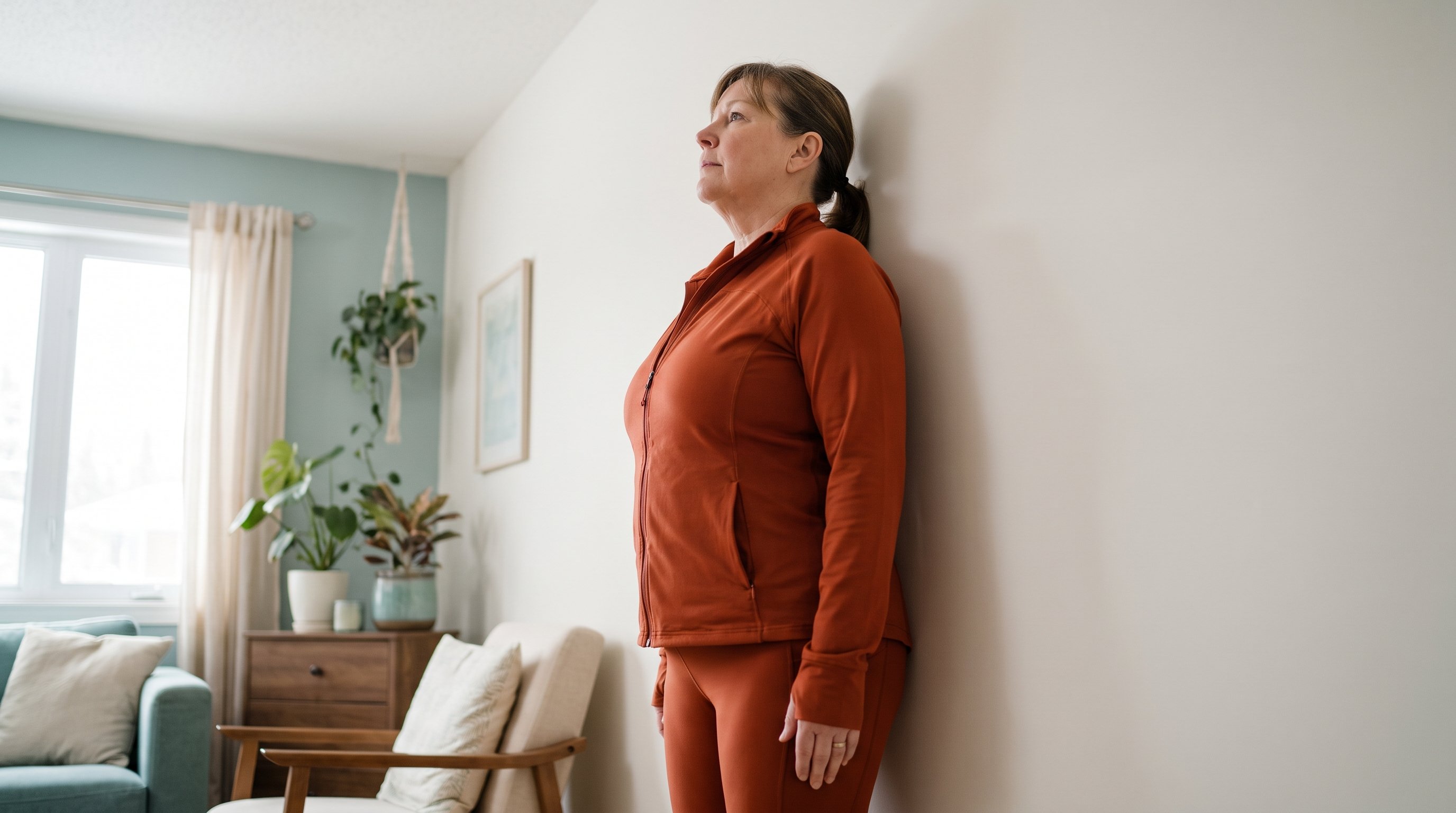
- Monday - Wall stand with shoulder blade squeezes, five minutes
- Tuesday - Seated chest opener and neck retractions, five minutes
- Wednesday - Standing hip hinge with chest lift, five minutes
- Thursday - Rest or a short walk with attention to standing tall
- Friday - Wall stand repeat plus gentle shoulder rolls
- Saturday - Seated posture check during a favourite chair activity
- Sunday - Light stretching focused on the chest and neck
None of these sessions need more than five to ten minutes, and the rest day is there on purpose so the habit does not feel like a chore.
How Often Posture Exercises Actually Help
Posture responds better to small, frequent reminders than to one big push, because the goal is changing a habit the body repeats all day long.

A Simple Weekly Target
Aiming for five to six short sessions a week gives the muscles enough repetition to start holding the new position without thinking about it.
| Frequency | Session Length | Main Focus |
|---|---|---|
| Daily short sessions | 5 to 10 minutes | Upper back and neck |
| Five days a week | 10 minutes | Mixed standing and seated work |
| Three days a week | 15 minutes | Slower progress, still useful |
| Once a week | 30 minutes | Least effective for habit change |
Short Daily Reps Versus One Long Weekly Workout
A single long posture workout once a week asks the body to learn something new and then forget it for six days before trying again.
Short daily reps, by contrast, keep reminding the muscles and the brain what upright feels like, which is closer to how the slump got built in the first place.

Five minutes a day adds up to roughly the same total time as one 35-minute weekly session, but it lands in a pattern the body can actually use.
Making Posture Work Fit an Ordinary Day
Posture exercises do not need a gym, a mat or even a change of clothes, which is part of why they fit so easily around a normal routine.
A kitchen counter, a hallway wall or the back of a sturdy chair all work fine as props, so the session can happen wherever the day already takes someone.
Keeping steps, water and wellness routines in one place, the kind of thing a tool like Painletics handles, can make it easier to notice when posture work has quietly slipped off the list.
Who Posture Exercises Suit and How to Adapt Them
Starting From Scratch
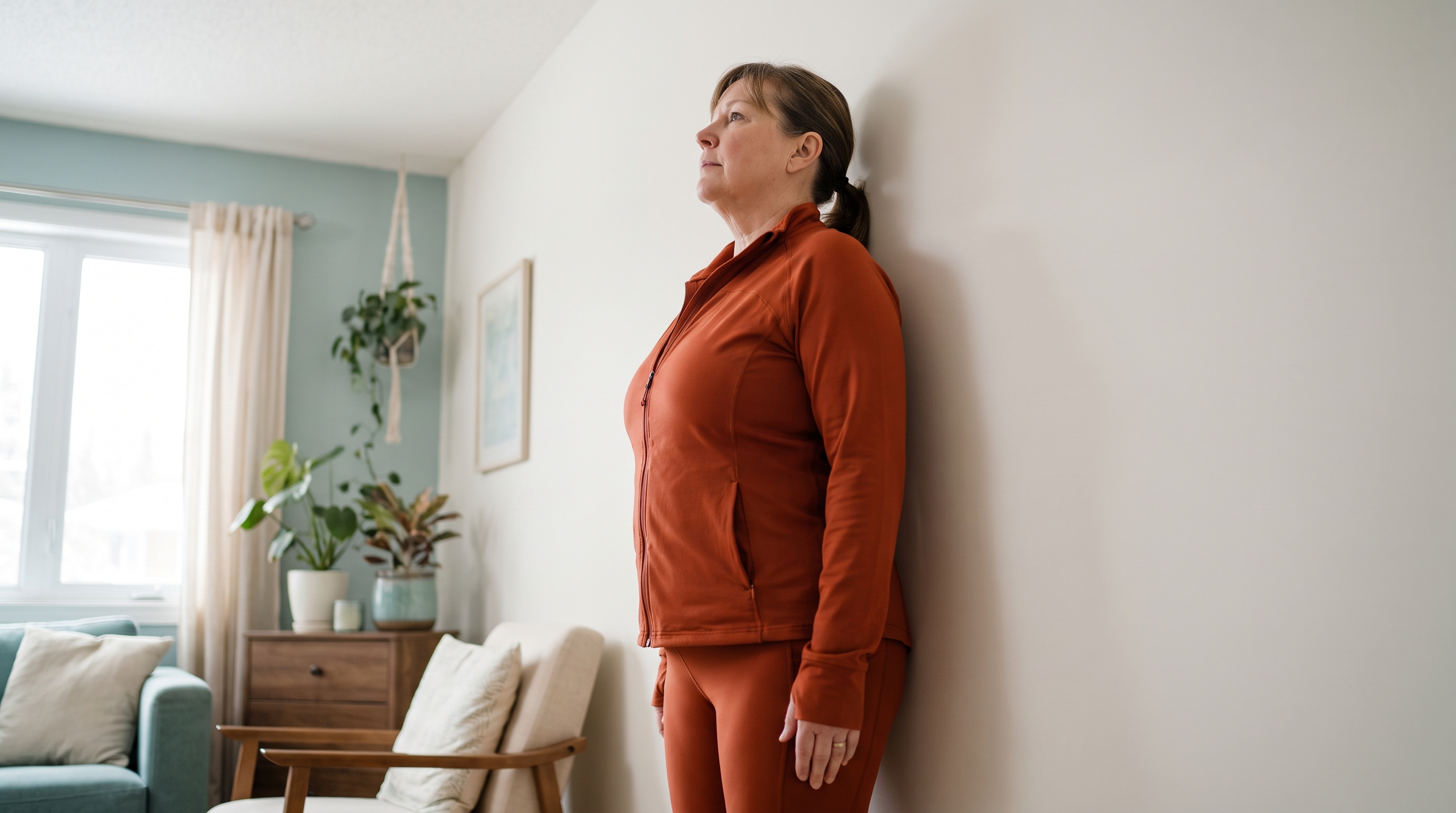
Beginners do best with wall-based moves since the wall gives instant feedback on where the shoulders and head actually sit.
Short on Time
A busy day can still fit two minutes of shoulder blade squeezes while waiting for the kettle to boil, which counts.
Managing Stiffness or Balance Concerns
Seated versions of the same moves remove any balance worry and still train the same muscles around the upper back and neck.
Already Fairly Active
Adding posture work after a walk or other activity, while the body is already warm, can make the stretches feel looser and easier.
What to Expect As Posture Starts to Shift
Posture does not straighten out overnight, and anyone expecting a dramatic change after a few sessions is likely to feel let down.
What tends to show up first is less about how someone looks and more about noticing the slump happening in real time, which is actually the useful part.
The habit of catching and correcting it builds gradually over weeks of repetition, not days, and that pace is normal rather than a sign anything is wrong.
Staying Consistent With Posture Exercises Through Painletics
Sticking with posture work is mostly a tracking problem, since the exercises themselves are simple but easy to forget on a busy day.
Painletics offers tailored exercises built around specific pain triggers and target areas, so someone dealing with a stiff neck or rounded shoulders gets a routine matched to that, not a generic list.
Daily habit trackers, audio and video routines, and a library of articles sit alongside the exercises, which makes it easier to see a short posture session as part of a normal day rather than a separate task to remember.
Move Without Pain
Ease Neck And Back Tension
Building a Posture Habit That Actually Lasts
The easiest way to start is picking one move, the wall stand or a seated shoulder squeeze, and doing it at the same point in the day for a week.
Painletics can sit alongside that habit as a reminder and a place to track it, but the first step is just choosing a time and showing up for five minutes.
FAQ
They can help the muscles that support upright standing and sitting work more consistently, which often shows up as fewer moments of slumping without thinking about it. They are not a quick fix and work best as a steady habit rather than a one-off effort.
Muscles respond to repetition at any age, so starting later does not rule out noticing a difference in how upright standing or sitting feels. Progress tends to be gradual rather than dramatic, whatever age someone starts at.
Seated versions of the same moves, like shoulder blade squeezes or chest openers done in a sturdy chair, train the same muscles without any balance risk. A wall for light support also works well for those easing into standing moves.
Forgetting is the biggest drop-off point, far more than the exercises being too hard, since five minutes a day is easy to skip without a reminder. Painletics' daily trackers are built to catch that gap before the habit disappears entirely.
Share this post