Balance Exercises for Seniors: A Simple Daily Routine
By:Author:Painletics Editorial
Updated on:October 23, 2026
- Steps to Start Balance Exercises Safely
- How Often Balance Work Should Happen Each Week
- Making Balance Practice Fit an Everyday Routine
- A Four-Week Plan for Building Steadier Balance
- What to Expect As Stability Improves Over Time
- Mistakes That Undermine a Balance Routine
- Staying Consistent With Balance Training Through a Digital App
- Building Steadier Days One Short Session at a Time
Balance exercises for seniors work by training the body to react faster to small wobbles, using short daily practice rather than long occasional sessions.
The mechanism is simple: balance relies on signals from the eyes, inner ear and the muscles in the feet, ankles and legs. Practising on purpose gives those systems more chances to talk to each other, so reactions get quicker and steadier over ordinary days.
This guide covers how to start, how often to practise, a four-week plan to copy, and the mistakes that quietly stall progress.
Steps to Start Balance Exercises Safely
Getting started does not need equipment or a gym. It needs a clear surface, sturdy support nearby and a few minutes of focus.
A Simple Way to Begin
- Find a sturdy support - a kitchen counter, heavy chair back or wall within easy reach.
- Stand tall with feet hip-width apart - keep knees soft, not locked, and shoulders relaxed.
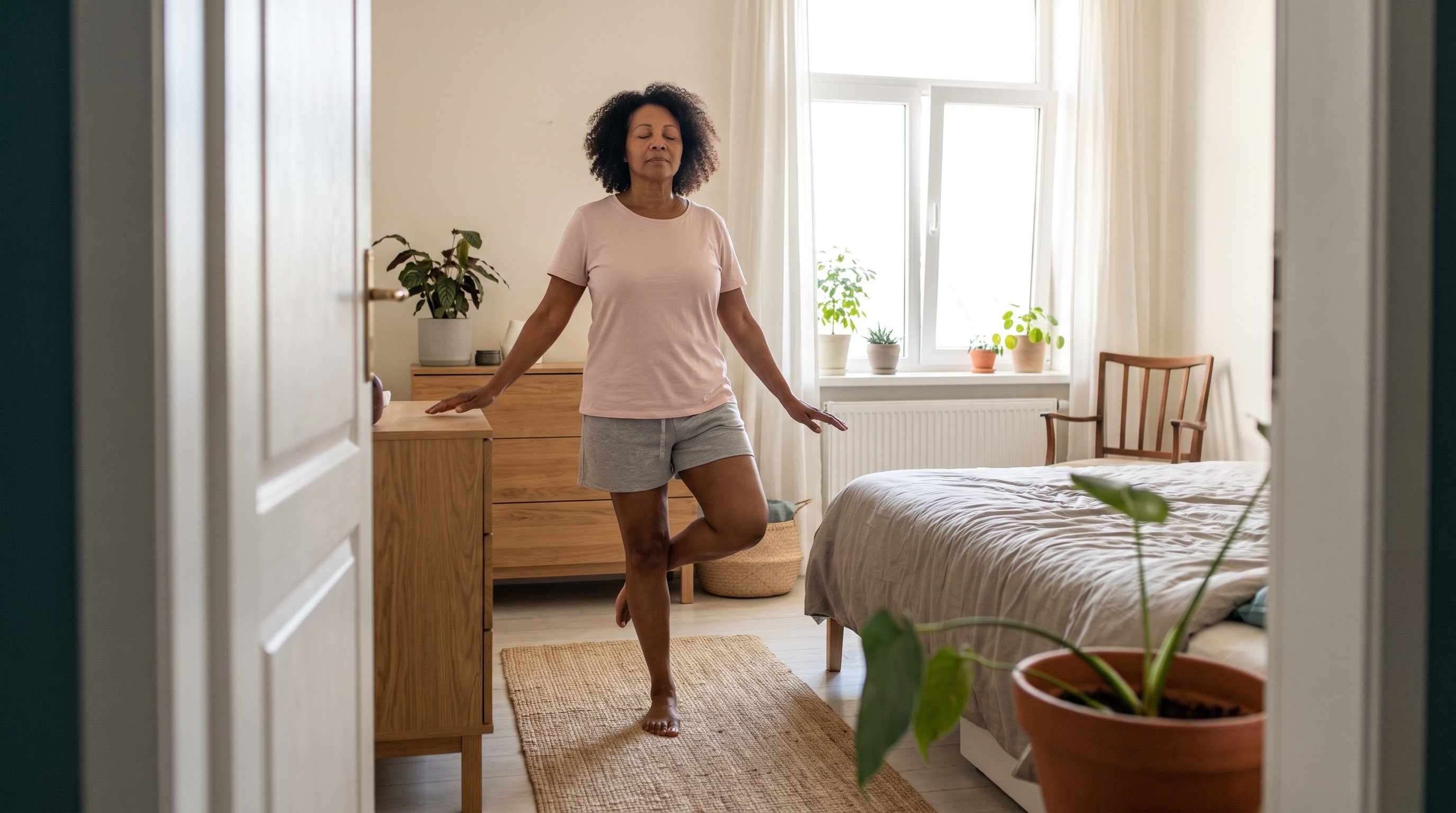
- Shift weight slowly onto one foot - lift the other heel off the ground just slightly.
- Hold for a few seconds - touch the support if wobbling starts, then reset.
- Switch sides evenly - give both legs the same amount of practice.
- Add gentle head turns once stable - looking left and right while balanced challenges the inner ear further.
- Finish standing normally - take a breath and notice how the legs feel before moving on with the day.
None of these steps need to look impressive. Small, controlled movement is the whole point.
How Often Balance Work Should Happen Each Week
Short sessions done often beat one long session done rarely, because the nervous system adapts through repeated small challenges rather than a single hard effort.
A Weekly Starting Point
Most people can fit balance practice into moments already built into the day, such as while brushing teeth or waiting for the kettle.
| Frequency | Focus | Setting |
|---|---|---|
| Daily, 3 to 5 minutes | Single-leg stands | Near a counter or wall |
| Three times a week | Heel-to-toe walking | A clear hallway |
| Twice a week | Slow weight shifts | Standing beside a chair |
| Once a week | Head turns while standing | Open floor space |

Mixing these into the day adds up without needing a dedicated workout slot.
Making Balance Practice Fit an Everyday Routine
The biggest barrier to balance work is not difficulty, it is forgetting to do it at all. Pairing it with an existing habit, like standing at the sink or waiting for the microwave, removes the need to remember a separate session.
Keeping track of which days actually happened matters more than people expect, because memory alone tends to overestimate consistency. Daily habit trackers that log these small routines alongside step goals and hydration make the pattern visible rather than guessed at.
Seeing the string of completed days can be the difference between quitting in week two and still going in month three.
A Four-Week Plan for Building Steadier Balance
The order below matters more than the exact numbers. Early weeks build comfort with the support nearby, later weeks reduce reliance on it.
| Stage | Focus |
|---|---|
| Week 1 | Single-leg stands with hand on support |
| Week 2 | Single-leg stands with fingertip touch only |
| Week 3 | Heel-to-toe walking plus head turns |
| Week 4 | Standing balance away from support, briefly |
Moving to the next stage only when the current one feels steady is more useful than rushing the calendar.
What to Expect As Stability Improves Over Time
Balance does not improve overnight, and anyone expecting a dramatic shift after a week is likely to feel disappointed and quit too early.
What tends to happen first is subtler: fewer small stumbles on uneven pavement, less gripping of handrails, a steadier feeling getting out of bed. These changes build gradually with repeated practice rather than arriving all at once.
The people who stick with it long enough to notice these shifts are usually the ones who kept sessions short and frequent rather than occasional and long.
Mistakes That Undermine a Balance Routine
Skipping the Support Entirely Too Soon
Standing away from a wall or counter before single-leg holds feel steady just invites a fall. Keep a hand near support until the easier version feels genuinely easy.
Practising Only When Remembering To
Irregular practice gives the nervous system inconsistent signals to adapt to. Attaching balance work to an existing daily habit keeps it from slipping away entirely.
Doing It in Socks on a Slippery Floor
Bare feet or grippy shoes on a stable surface make practice safer and give more honest feedback about actual stability.
Holding the Breath During the Hold
Tensing up and holding breath adds unnecessary strain and can actually make wobbling worse. Breathing normally through each hold keeps the body relaxed enough to respond.
Comparing Progress to Someone Else's Pace
Balance improves at different speeds depending on starting point and how often someone actually practises. Tracking personal consistency matters more than comparing against anyone else's timeline.
Staying Consistent With Balance Training Through a Digital App
Knowing the steps is one thing, actually doing them most days of the week is the part that decides whether balance improves at all.
Painletics offers customized exercises tailored to the areas someone wants to steady, alongside audio and video routines that walk through each movement without needing to remember the sequence from memory. The challenges feature also turns small changes, like a daily balance check, into something worth sticking with rather than another task on a list.
Move Without Pain
Ease Neck And Back Tension
Building Steadier Days One Short Session at a Time
Steadier balance does not require long workouts or special equipment, just a few minutes near a counter most days and the patience to let small gains add up.
Pick one exercise from the list above and try it today, right where a sturdy support is already within reach. For anyone who wants the routine tracked and tailored automatically, Painletics keeps the whole thing in one place.
FAQ
Balance exercises train the body to react faster to small wobbles, which is the mechanism behind steadier movement over time. No single session produces a guarantee, but repeated practice builds the reflexes involved in staying upright.
Yes, wobbling at the start is expected and is actually a sign the balance system is being challenged. Keeping a hand near support during early sessions makes this stage safer.
A kitchen counter, sturdy chair back or wall can all serve as support without needing another person present. Starting every session near one of these removes the need for assistance altogether.
Missing a few days does not undo earlier progress, it just means restarting at a comfortable stage rather than the hardest version. Painletics' daily trackers make it easy to see the gap and pick the routine back up without guesswork.
Share this post